What Are Woven Polypropylene Bags?
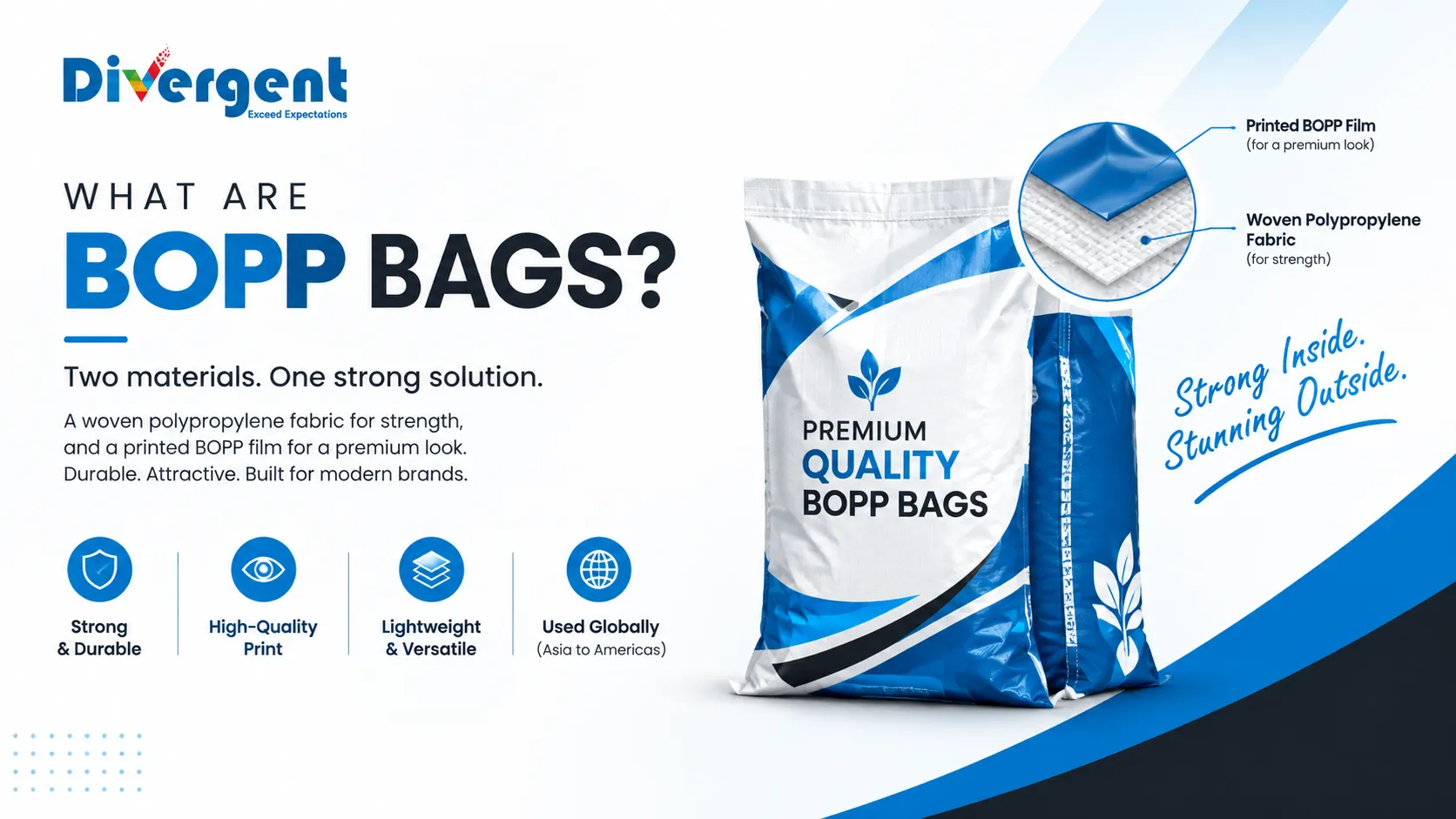
Woven polypropylene bags are strong, lightweight sacks made by weaving thin plastic tapes of polypropylene (PP) into fabric, then cutting and stitching that fabric into bags. They carry everything from rice, sugar and animal feed to cement, fertilizer and chemicals, usually in sizes from 5 kg to 50 kg.
You’ve almost certainly handled one. The shiny white sack of rice in your kitchen, the fertilizer bag in a farm shed, the cement bag on a building site: most of them are PP woven bags. In the trade you’ll also hear them called poly woven bags, polywoven bags, woven poly bags or simply woven plastic bags.
They look simple. But the tape width, fabric weight, coating, printing and bag style all change how a bag performs and what it costs. This guide covers what woven polypropylene bags are made of, the 7 main types, where each one is used, how PP compares with PE, and how to choose the right bag.
Key takeaways:
- Woven polypropylene bags are made from stretched PP tapes woven into fabric.
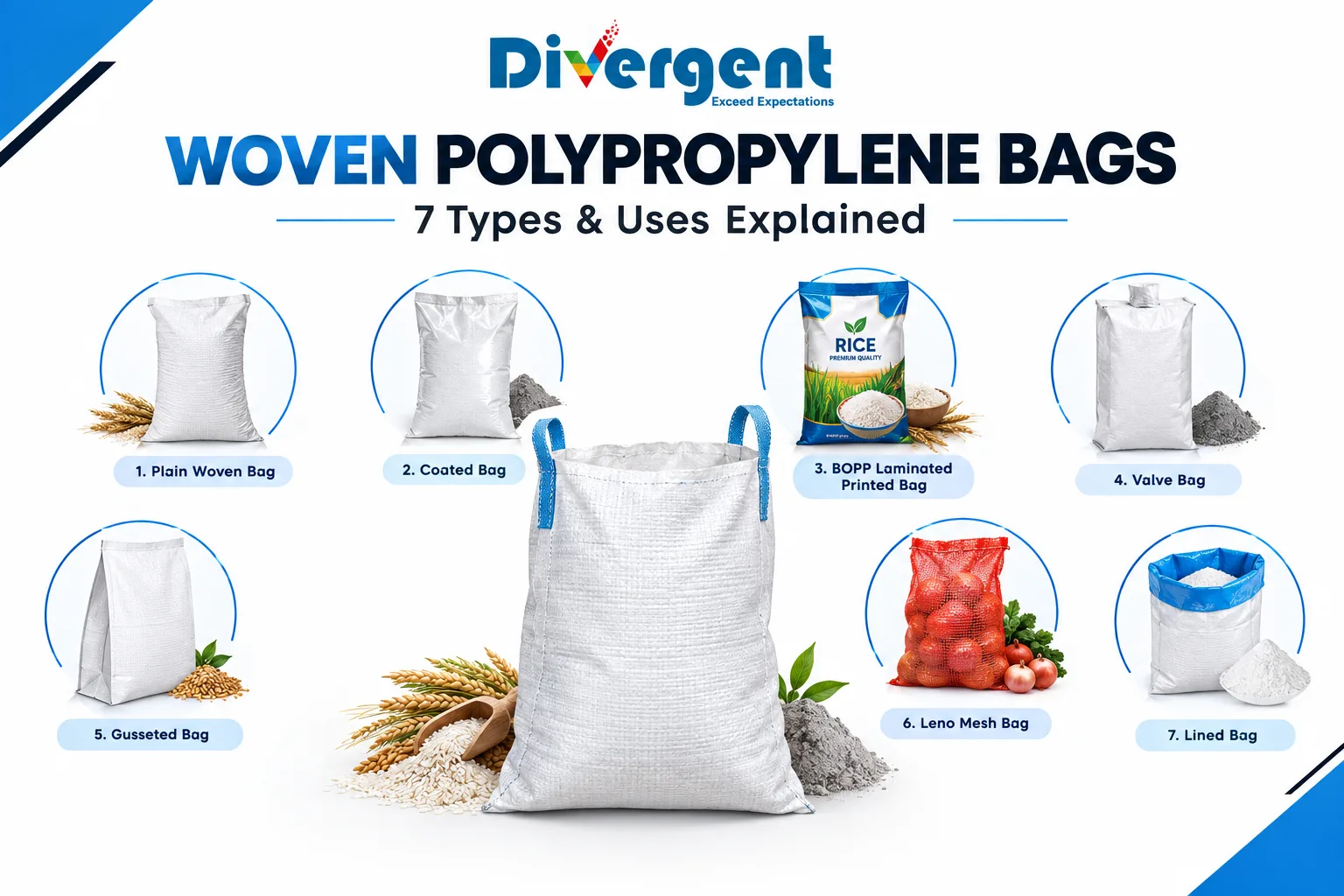
- The 7 main types are plain, coated, BOPP laminated, valve, gusseted, leno mesh and lined.
- Coated or lined bags suit powders and moisture-sensitive products; mesh bags suit fresh produce.
- PP is stronger and lighter than PE for woven sacks; PE is common as the inner liner.
- Always check GSM, mesh, coating and UV protection before ordering.
Table of Contents
- How woven polypropylene bags are made
- 7 types of woven polypropylene bags
- Uses by industry
- Polypropylene vs polyethylene bags
- Woven vs non-woven polypropylene bags
- Advantages and limitations
- How long they last
- Are they food safe?
- How to choose the right bag
- For bag manufacturers
- FAQs
How Are Woven Polypropylene Bags Made?
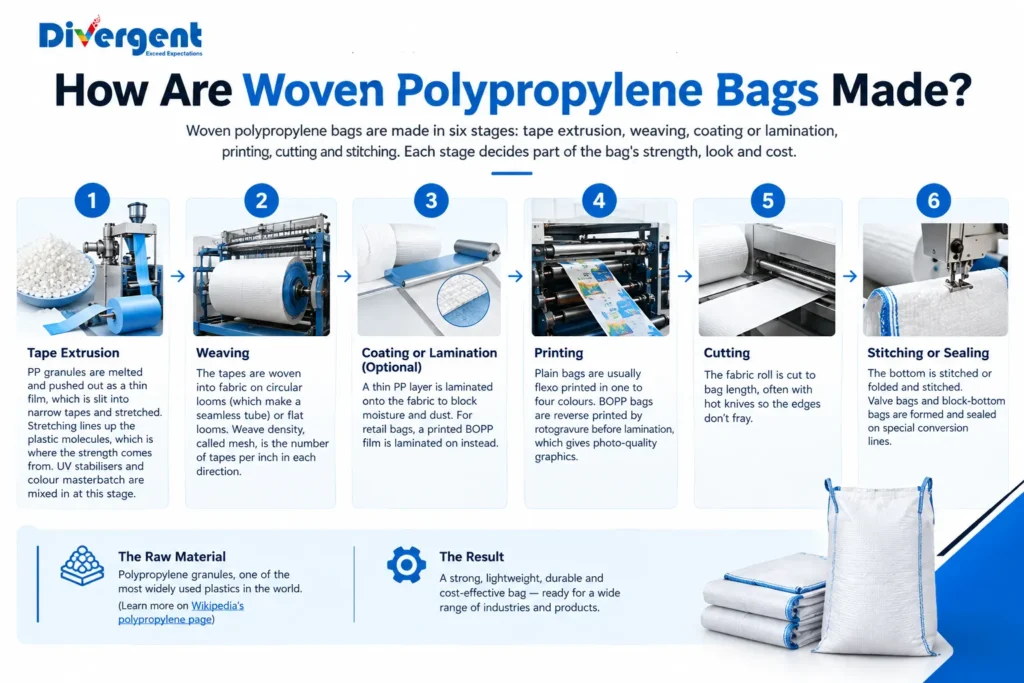
Woven polypropylene bags are made in six stages: tape extrusion, weaving, coating or lamination, printing, cutting and stitching. Each stage decides part of the bag’s strength, look and cost.
The raw material is polypropylene granules, one of the most widely used plastics in the world. You can read about its properties on Wikipedia’s polypropylene page.
- Tape extrusion. PP granules are melted and pushed out as a thin film, which is slit into narrow tapes and stretched. Stretching lines up the plastic molecules, which is where the strength comes from. UV stabilisers and colour masterbatch are mixed in at this stage.
- Weaving. The tapes are woven into fabric on circular looms (which make a seamless tube) or flat looms. Weave density, called mesh, is the number of tapes per inch in each direction.
- Coating or lamination (optional). A thin PP layer is laminated onto the fabric to block moisture and dust. For retail bags, a printed BOPP film is laminated on instead.
- Printing. Plain bags are usually flexo printed in one to four colours. BOPP bags are reverse printed by rotogravure before lamination, which gives photo-quality graphics.
- Cutting. The fabric roll is cut to bag length, often with hot knives so the edges don’t fray.
- Stitching or sealing. The bottom is stitched or folded and stitched. Valve bags and block-bottom bags are formed and sealed on special conversion lines.
This same bag production process, scaled up with heavier fabric and lifting loops, is how jumbo bags are made. If you work with bigger bags, see our guide to types of FIBC bags.
What Are the 7 Types of Woven Polypropylene Bags?
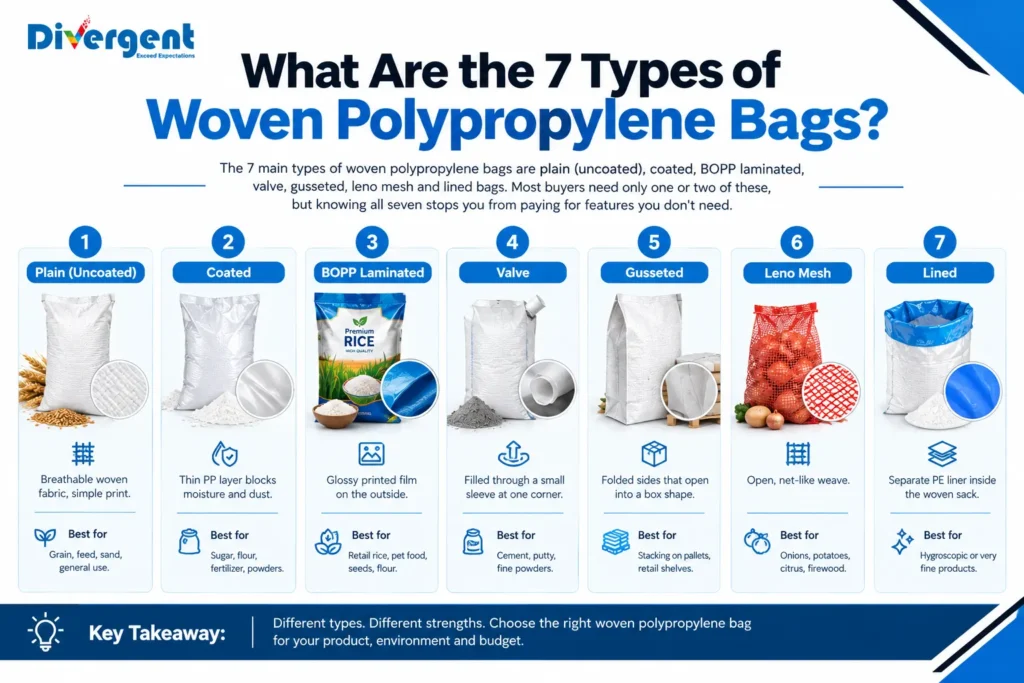
The 7 main types of woven polypropylene bags are plain (uncoated), coated, BOPP laminated, valve, gusseted, leno mesh and lined bags. Most buyers need only one or two of these, but knowing all seven stops you from paying for features you don’t need.
| Type | What makes it different | Best for |
|---|---|---|
| Plain (uncoated) | Breathable woven fabric, simple print | Grain, feed, sand, general use |
| Coated | Thin PP layer blocks moisture and dust | Sugar, flour, fertilizer, powders |
| BOPP laminated | Glossy printed film on the outside | Retail rice, pet food, seeds, flour |
| Valve | Filled through a small sleeve at one corner | Cement, putty, fine powders |
| Gusseted | Folded sides that open into a box shape | Stacking on pallets, retail shelves |
| Leno mesh | Open, net-like weave | Onions, potatoes, citrus, firewood |
| Lined | Separate PE liner inside the woven sack | Hygroscopic or very fine products |
What Is a Plain Woven Polypropylene Bag?
A plain woven polypropylene bag is an uncoated sack whose fabric lets air pass through the weave. It’s the most basic and cheapest type of pp woven bag, ideal for grain, seeds and animal feed that need to breathe.
Because it’s so affordable and tough, you’ll see it everywhere from farms to construction sites.
What Is a Coated Woven Bag?
A coated woven bag has a thin layer of molten PP laminated onto the fabric, which closes the gaps in the weave. Fine powder stays in and moisture stays out, which is why sugar, flour and fertilizer producers almost always use coated bags.
What Is a BOPP Laminated Bag?
A BOPP laminated bag is a woven PP bag with a printed BOPP (biaxially oriented polypropylene) film laminated on the outside. It gives full-colour, photo-quality print and a glossy or matte finish, which makes it the standard for retail shelves.
The print sits on the inside of the film, so it doesn’t scuff off in handling. Read our full guide to BOPP bags for more.
What Is a Valve Bag?
A valve bag is sealed at both ends and filled through a small sleeve in one corner. The pressure of the contents closes the valve after filling, which makes it the standard for cement and building powders.
Filling is fast and clean, with far less dust than open-mouth bags.
What Is a Gusseted Woven Bag?
A gusseted woven bag has folded side panels that open out when the bag is filled, giving a squarer, box-like shape. It stacks more neatly on pallets and stands up better on a shop shelf.
What Is a Leno Mesh Bag?
A leno mesh bag is a woven polypropylene bag with an open, net-like weave that lets air flow freely. It’s used for onions, potatoes, citrus and firewood, because the airflow stops produce from sweating or rotting.
If you’ve bought a sack of onions or potatoes, it was probably a leno bag. That’s why “onion bag” and “potato bags” are some of the most searched terms in this category.
What Is a Lined Woven Bag?
A lined woven bag has a separate polyethylene liner placed or stitched inside the woven sack. The woven outer gives strength and the liner gives a full moisture barrier.
They’re used for salt, chemicals, milk powder and other products that absorb moisture from the air.
What Are Woven Polypropylene Bags Used For?
Woven polypropylene bags are used in agriculture, food, construction, chemicals and retail. Anywhere a dry product needs to be packed in 5 to 50 kg units, there’s a good chance it goes into a woven PP sack.
| Industry | Products | Typical bag |
|---|---|---|
| Fertilizer | Urea, DAP, NPK | Coated or lined, often UV-stabilised |
| Animal feed | Poultry, cattle and fish feed | Plain or BOPP laminated |
| Fresh produce | Onions, potatoes, citrus | Leno mesh |
| Grains and rice | Wheat, rice, pulses | Plain, or BOPP for retail rice |
| Sugar and flour | Sugar, atta, maida | Coated or lined |
| Construction | Cement, putty, sand | Valve or plain |
| Chemicals and minerals | Resins, salts, powders | Coated with liner |
| Pet food and seeds | Dog food, bird seed, garden seed | BOPP laminated, gusseted |
Which Bag Is Best for Fertilizer?
The best fertilizer bag is a coated or lined woven polypropylene bag made with UV-stabilised tapes. It keeps moisture out and survives months of storage in open yards.
An unstabilised bag left in the sun can go brittle quickly, and a brittle bag can split when it’s lifted.
What Are Feed Bags and Totes Made Of?
Most feed bags and totes are made of plain woven polypropylene, because it’s tough enough for rough handling and cheap enough for high volumes. Branded feed companies increasingly switch to BOPP laminated bags for better shelf appeal.
What Bags Are Used for Onions and Potatoes?
Onions and potatoes are packed in leno mesh bags, a type of woven PP bag with an open weave. The airflow stops sweating and rot, and buyers can see the produce inside.
Why Did Woven Bags Replace Paper Sacks in Industry?
In construction and chemicals, woven polypropylene bags replaced paper sacks in many markets because they don’t tear as easily when wet or dropped. Valve bags now dominate cement packing, while coated and lined industrial bags and sacks handle chemicals and minerals.
Polypropylene vs Polyethylene: Which Is Better for Bags?
Polypropylene (PP) is stiffer, stronger for its weight and handles more heat, which makes it the standard material for woven sacks. Polyethylene (PE) is softer and more flexible, and stays tougher in the cold, which makes it common for films, liners and carry bags.
The “PP vs PE” question comes up a lot because both are polyolefins and look similar. Here’s how they compare in bags:
| Property | Polypropylene (PP) | Polyethylene (PE, mostly HDPE for woven bags) |
|---|---|---|
| Feel | Stiffer, slightly glossy | Softer, waxy, more flexible |
| Weight | Lighter (lower density) | Slightly heavier |
| Strength for weight | Higher | Lower |
| Heat resistance | Better; melts at a higher temperature | Lower |
| Cold resistance | Can turn brittle in freezing conditions | Stays tougher in the cold |
| Common bag uses | Woven sacks, FIBC, BOPP film | Liners, films, carry bags, some woven sacks |
| Recycling code | 5 | 2 (HDPE) or 4 (LDPE) |
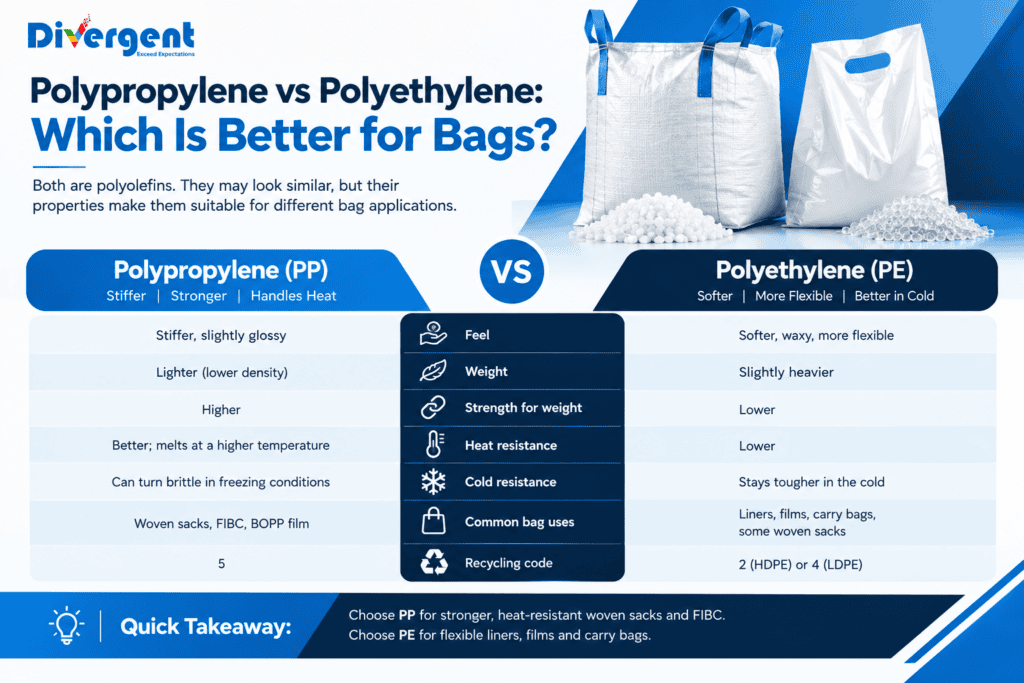
In practice, most woven sacks are PP, and PE shows up as the liner inside them. When buyers ask for “PP and PE bags”, they often mean exactly this combination: a woven PP outer with a PE inner liner. For more on the two plastics, see polyethylene on Wikipedia and the resin identification codes used for recycling.
Woven vs Non-Woven Polypropylene Bags: What’s the Difference?
Woven polypropylene bags are made by weaving stretched PP tapes together, which makes them very strong and suitable for heavy loads. Non woven polypropylene bags are made from PP fibres bonded together with heat, which gives a soft, cloth-like fabric suited to light shopping and promotional bags.
Both start from the same plastic, so people mix them up. The difference is in how the fabric is built. Woven fabric has a clear criss-cross pattern of tapes, like the woven fabric in clothing. Non-woven fabric has no pattern; the fibres are randomly laid and fused.
| Feature | Woven PP | Non-woven PP |
|---|---|---|
| How it’s made | Tapes woven on looms | Fibres bonded by heat |
| Strength | High, carries 25–50 kg easily | Lower, for light loads |
| Look | Visible weave, often shiny | Soft, matte, cloth-like |
| Typical products | Feed, fertilizer, cement, rice sacks | Shopping totes, promo bags, grow bags |
| Reuse | Industrial reuse possible | Popular as reusable shopping bags |
If your product weighs more than a few kilograms, you want woven. If you want a branded tote for a trade show, you want non-woven.
What Are the Advantages and Limitations of Woven Polypropylene Bags?
The biggest advantages of woven polypropylene bags are high strength, low weight and low cost. Their main limitations are sensitivity to sunlight without UV protection and, for uncoated bags, poor resistance to moisture and fine dust.
Advantages:
- Strong for their weight. A bag weighing well under 100 g can carry 25 to 50 kg.
- Tear resistant. If a tape breaks, the weave stops the tear from running the way it would in paper.
- Low cost. Cheaper than paper, jute or multi-wall sacks in most markets.
- Customisable. Any size, colour, coating, liner or print.
- Moisture and chemical resistant when coated.
- Recyclable. PP carries recycling code 5 and can be reprocessed.
Limitations:
- UV damage. Without stabilisers, sunlight makes the tapes brittle. Always ask for UV-stabilised bags for outdoor storage.
- Slippery surface. Smooth bags can slide on tall stacks. Anti-slip coating helps.
- Breathable when uncoated. Great for grain, bad for sugar or fine powder.
- Recycling isn’t everywhere. Collection systems for used woven sacks vary a lot by country.
How Long Do Woven Polypropylene Bags Last?
Stored indoors, away from sunlight, woven polypropylene bags can last for years. Outdoors, their life depends almost entirely on UV protection: an unstabilised bag can weaken within months, while a UV-stabilised bag lasts much longer.
Sunlight is the main enemy. UV rays slowly break down the polypropylene chains in the tapes, and the fabric turns chalky, faded and brittle. A bag in that state may look fine on the stack and then split the moment someone lifts it.
That’s why suppliers rate UV-stabilised bags by the number of hours of sun exposure they’re designed to withstand. If your bags will sit in an open yard, like fertilizer or cement at a building site, ask for the UV rating in writing.
A few simple habits make any woven PP bag last longer:
- Store empty bags indoors, out of direct sunlight
- Cover stacks of filled bags with a tarpaulin if they must stay outside
- Keep bags away from sharp edges on pallets and racks
- Use older stock first, so bags don’t age in the warehouse
Are Woven Polypropylene Bags Food Safe?
Woven polypropylene bags can be food safe when they’re made from virgin, food-grade PP in a clean production environment. Bags made with recycled material or unknown additives should not be used for food.
Polypropylene itself is widely used in food packaging, from yoghurt tubs to bottle caps. The risk comes from what goes into the bag besides virgin PP: recycled granules, certain colour masterbatches, or printing inks on the inside surface.
If you pack rice, sugar, flour or any other food product, ask your supplier for:
- Confirmation that only virgin, food-grade PP is used
- A food-contact compliance certificate for your target market
- Details of any liner, since the liner is what actually touches the food in lined bags
- Information on the factory’s hygiene or food safety certification
BOPP laminated bags used for retail rice and flour are reverse printed, so the ink sits between the film and the fabric, not against the food.
How Do You Choose the Right Woven Polypropylene Bag?
To choose the right woven polypropylene bag, match six things to your product: bag type, fabric weight (GSM), mesh, size, coating or liner, and UV protection. Get these right and you avoid both bag failures and overpaying.
- Bag type. Use the 7 types above. Fresh produce means leno; cement means valve; retail means BOPP.
- Fabric weight (GSM). GSM is grams per square metre of fabric. Heavier fabric is stronger and costs more. Ask your supplier for the lowest GSM that passes your load and drop tests.
- Mesh. Higher mesh means a tighter weave, better for fine products. Lower mesh saves material.
- Size and capacity. Size the bag to the product’s density, not just its weight. 25 kg of feed needs far more space than 25 kg of cement.
- Coating or liner. Needed for powders, moisture-sensitive products and anything hygroscopic.
- UV protection. Essential if bags will sit outdoors, such as fertilizer yards.
If you buy wholesale polypropylene bags, also ask for:
- A sample and a test report for tensile strength
- The exact GSM, mesh and tape width in writing
- UV hours the bag is stabilised for, if relevant
- Print proofs before a bulk order
What Mistakes Do Buyers Make With PP Woven Bags?
The most common mistake is choosing a bag on price alone, without checking whether its GSM, coating and UV protection match the product. Here are the mistakes that cost buyers the most:
- Choosing on price per bag alone. A cheaper, lighter bag that bursts on the filling line costs more in lost product.
- Skipping coating for powders. Uncoated bags leak fine product through the weave.
- Ignoring UV. Fertilizer bags stored outside without UV protection can break when lifted.
- Ordering BOPP for tiny runs. Rotogravure cylinders have an upfront cost, so BOPP only pays off above a certain order size.
How Do Manufacturers Manage Woven Polypropylene Bag Production?
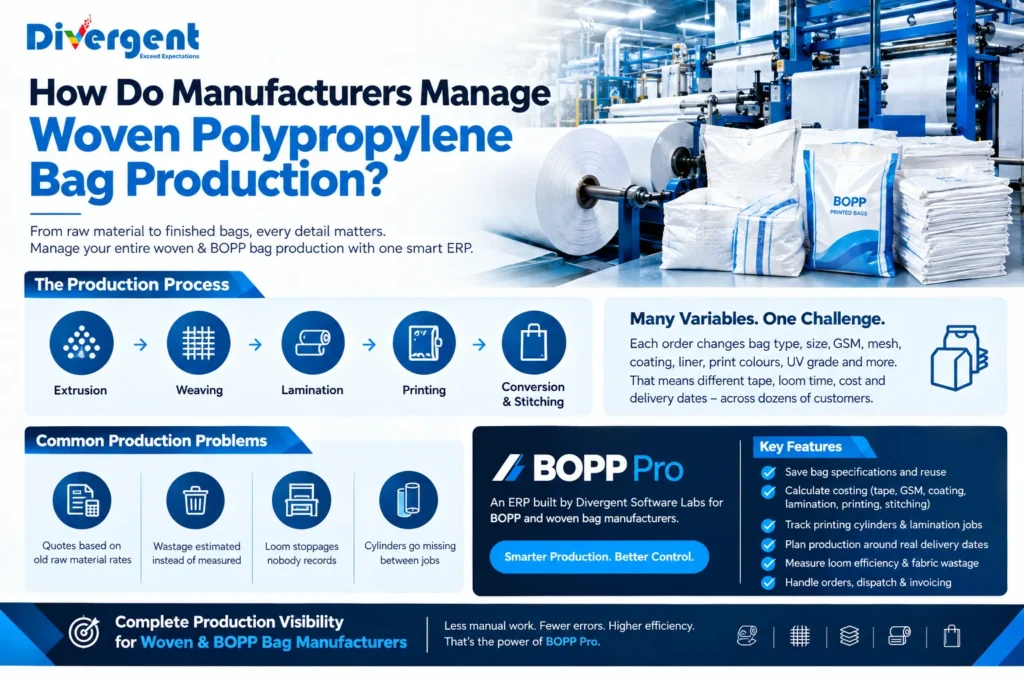
Most woven sack and BOPP bag manufacturers still manage production with spreadsheets, paper job cards and experience. That works for a few customers, but it breaks down as the number of bag specifications and orders grows.
Think about one order for woven polypropylene bags. The bag type, size, GSM, mesh, coating, liner, print colours, UV grade and stitching all change the tape needed, the loom time, the cost and the delivery date. Add BOPP printing cylinders and lamination, and one plant can be tracking hundreds of variables across dozens of customers.
The usual problems follow: quotes based on old raw material rates, wastage that’s estimated instead of measured, loom stoppages nobody records, and cylinders that go missing between jobs.
BOPP Pro is an ERP built by Divergent Software Labs for BOPP and woven bag manufacturers. With it, you can:
- Save each bag specification once and reuse it for repeat orders
- Calculate bag costing from tape, GSM, coating, lamination, printing and stitching
- Track printing cylinders and lamination jobs
- Plan extrusion, weaving, lamination, printing and conversion around real delivery dates
- Measure loom efficiency and fabric wastage by shift
- Handle orders, dispatch and invoicing in one place
Working out your costs?
Read our BOPP bag cost calculation guide, or book a free BOPP Pro demo and see it working with your own bag specs.
FAQs About Woven Polypropylene Bags
What are woven polypropylene bags made of?
Woven polypropylene bags are made of polypropylene plastic. The PP is extruded into thin tapes, stretched for strength, and woven into fabric that is cut and stitched into bags.
Are woven polypropylene bags waterproof?
Uncoated woven polypropylene bags are water resistant but not waterproof, because water can pass through the weave. Coated, laminated or lined bags give much better moisture protection.
How much weight can a woven polypropylene bag hold?
Most standard woven PP sacks are designed for 5 to 50 kg. The exact capacity depends on the fabric GSM, stitching and bag size. Larger loads of 500 kg and up use FIBC jumbo bags instead.
What is the difference between PP woven bags and BOPP bags?
A BOPP bag is a PP woven bag with a printed BOPP film laminated onto the outside. The film adds high-quality graphics, a glossy or matte finish and extra moisture resistance, at a higher cost.
Is polypropylene better than polyethylene for bags?
For woven sacks, polypropylene is usually better because it’s stronger for its weight and handles heat well. Polyethylene is often better for liners and films because it’s softer and stays tougher in the cold.
How long do woven polypropylene bags last in the sun?
It depends on UV protection. Unstabilised woven PP bags can turn brittle within months of outdoor exposure, while UV-stabilised bags are designed to last much longer. Ask your supplier for the bag’s UV rating.
Final Thoughts on Woven Polypropylene Bags
Woven polypropylene bags stay popular for a simple reason: they give a lot of strength for very little weight and cost. The trick is picking the right version. Start with the bag type, then match GSM, mesh, coating, liner and UV protection to your product and how it will be stored.
When in doubt, ask for a sample and a test report. A good supplier will be happy to help you get the spec right before you place a bulk order.