Manufacturing businesses manage multiple processes every day, including production planning, inventory, procurement, quality control, costing, and dispatch. When these activities operate through disconnected systems or manual spreadsheets, teams often struggle to get accurate information and make timely decisions.
This is where AI in Manufacturing ERP makes a real difference. Businesses using AI in Manufacturing ERP report faster decisions,fewer stockouts and better production visibility.
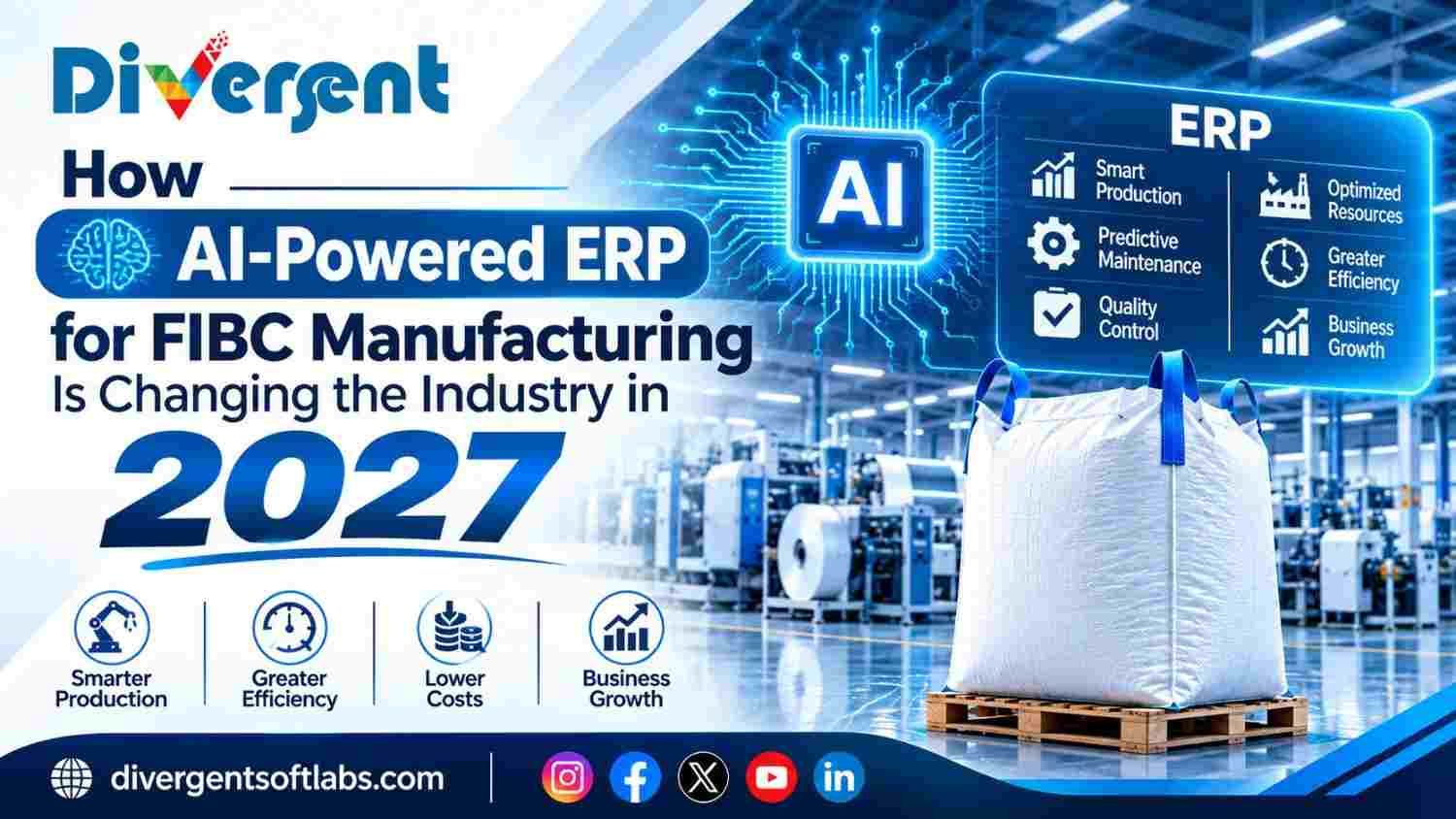
By combining Artificial Intelligence (AI) with Manufacturing Enterprise Resource Planning (ERP) software, businesses can move beyond basic data recording. They can analyze operational information, identify potential problems, automate repetitive workflows and support better decisions.
According to McKinsey & Company, manufacturers that adopt AI and digital technologies in their operations can significantly improve productivity and reduce operational costs. Similarly, Gartner identifies AI-powered ERP as one of the key technology trends transforming manufacturing operations.
In this guide, we explore seven practical ways AI can improve manufacturing ERP operations, the challenges businesses should consider and how to approach implementation.
What Is AI in Manufacturing ERP?
AI in Manufacturing ERP refers to the use of artificial intelligence technologies within or alongside ERP systems to analyse business data, automate workflows, and support operational decisions.
Traditional ERP software connects business functions. AI in Manufacturing ERP goes further, adding intelligence to every process.
AI adds capabilities such as:
- Analysing historical business data
- Identifying unusual patterns
- Forecasting material requirements
- Supporting production planning
- Automating repetitive workflows
- Generating operational insights
- Helping teams identify issues earlier
The goal is not to replace ERP software. It is to make manufacturing processes more intelligent, connected and responsive.
Manufacturers looking to connect their operations can explore manufacturing ERP software designed for manufacturing and packaging workflows.
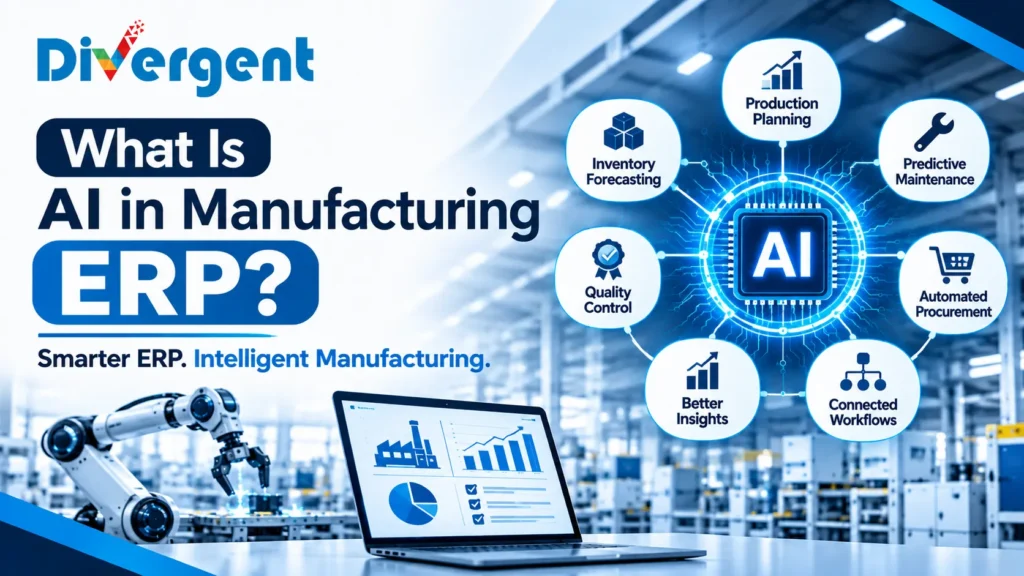
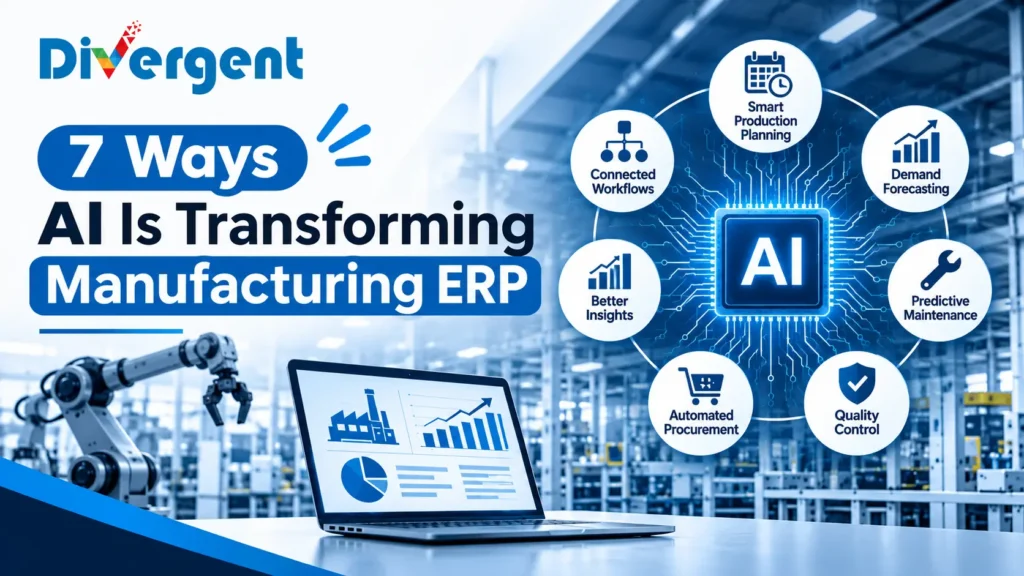
7 Ways AI Is Transforming Manufacturing ERP
1. Smarter Production Planning
Production planning involves coordinating customer orders, machine capacity, raw materials, labour and delivery schedules. Manual planning can become difficult when multiple orders compete for the same resources.
AI can analyse:
- Pending customer orders
- Available raw materials
- Machine capacity
- Previous production performance
- Delivery deadlines
- Historical production data
Business benefit: Better planning visibility, fewer scheduling conflicts and more informed production decisions. IBM research shows that AI-driven production planning can reduce scheduling conflicts by up to 30% in manufacturing environments.
2. Better Inventory Management and Demand Forecasting
Excess inventory increases storage and working capital costs. Insufficient inventory can delay production and customer deliveries.
AI can analyse historical consumption, order trends, supplier lead times and current stock information to support inventory forecasting. Manufacturers can use AI to:
- Estimate future material requirements
- Identify fast-moving and slow-moving items
- Highlight unusual consumption patterns
- Support reorder planning
- Identify potential stock shortages
Business benefit: Better inventory visibility and more informed purchasing decisions. Learn more about how AI Procurement Agent for Manufacturing eliminates stockouts and automates purchasing decisions.
3. Predictive Maintenance and Machine Monitoring
Unexpected machine breakdowns can affect production schedules, labour utilisation and delivery commitments.
AI can analyse available machine data, including temperature, vibration, operating hours and historical maintenance records, to identify patterns that may indicate equipment problems. According to Deloitte Insights, predictive maintenance powered by AI can reduce machine downtime by up to 50% and extend equipment life by 20-40%.
Business benefit: Earlier identification of potential maintenance issues and better maintenance planning.
4. AI-Powered Quality Control
Quality problems can increase material waste, rework, customer complaints and production costs.
AI can support quality control by analysing inspection records, defect patterns, production parameters and images captured through computer vision systems. Manufacturers can use these capabilities to:
- Identify recurring product defects
- Analyse quality inspection results
- Detect unusual production patterns
- Support image-based inspection
- Connect quality findings with production batches
Business benefit: Better defect analysis and more informed quality decisions.
5. Automated Procurement and Purchase Workflows
Procurement teams regularly handle material requests, supplier quotations, purchase orders, delivery follow-ups, and invoice information. Many of these activities involve repetitive data entry and coordination.
AI and workflow automation can support:
- Purchase request processing
- Supplier document extraction
- Purchase order information checks
- Delivery follow-up reminders
- Invoice data extraction
- Identification of unusual purchasing patterns
Business benefit: Less repetitive administrative work and better procurement coordination. Businesses can also explore Enterprise AI Automation to understand how intelligent automation can support repetitive business processes.
6. Faster MIS Reporting and Business Insights
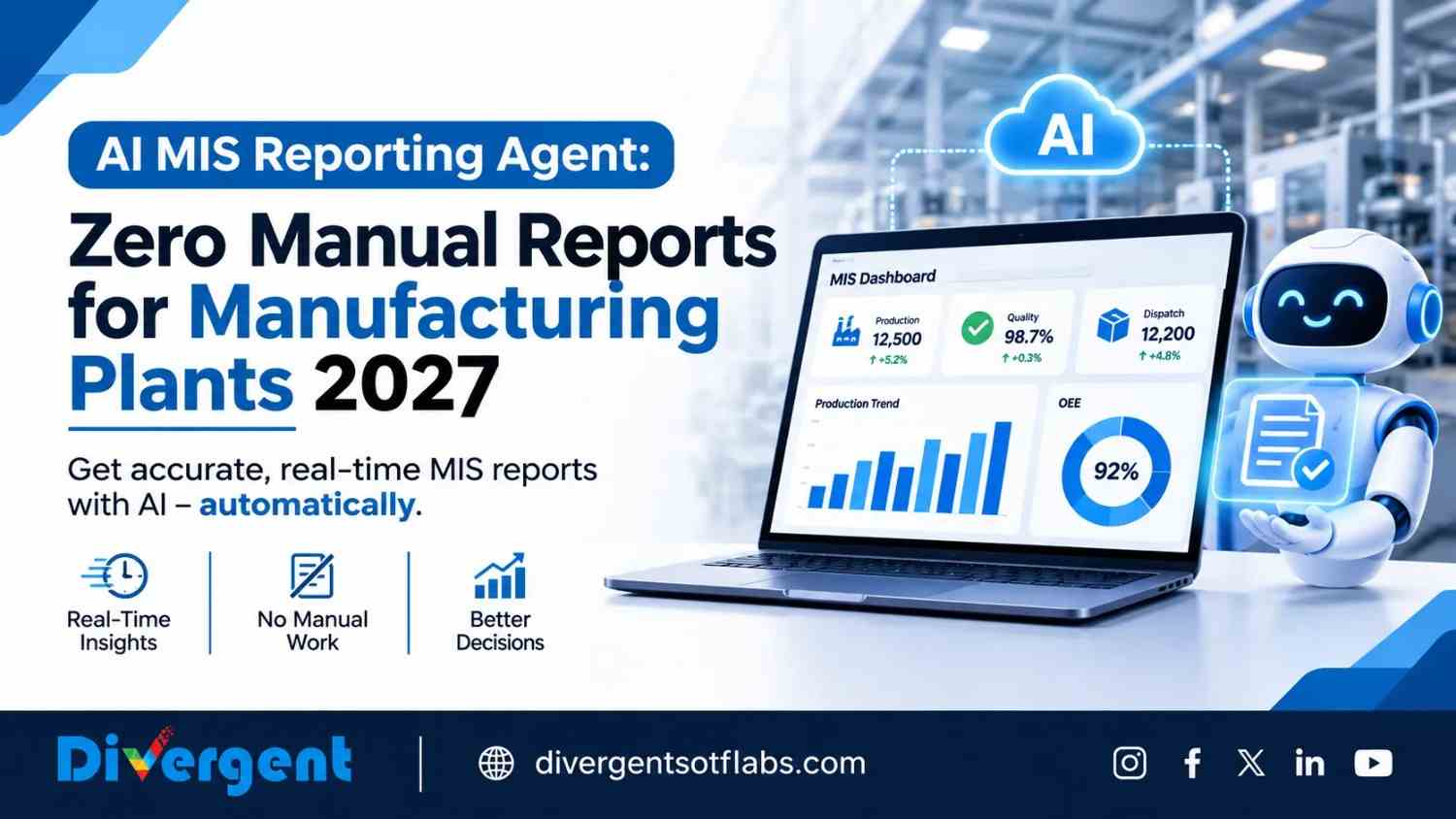
Manufacturing managers need accurate information about production output, machine performance, inventory, quality, costs and dispatch. When reports are prepared manually from multiple spreadsheets, collecting and checking information can take considerable time.
AI-supported ERP reporting can help teams:
- Summarise production performance
- Identify unusual changes in output
- Analyse inventory movements
- Compare planned and actual production
- Highlight quality trends
- Prepare management summaries
Business benefit: Faster access to operational information and more informed management decisions. See how Agentic AI for Manufacturing ERP can transform your operations reporting.
7. Connected Workflows Through AI Agents
Manufacturing activities often involve several departments. For example, a delayed customer order may affect production planning, procurement, inventory, quality and dispatch.
AI agents can support defined multi-step workflows by retrieving relevant information, preparing recommendations and initiating approved actions through connected systems.
Business benefit: Better coordination across departments and reduced manual information gathering. Learn more about Agentic AI Solutions for connected business workflows.
AI-Powered ERP vs Traditional Manufacturing ERP
| Capability | Traditional ERP | AI-supported ERP |
|---|---|---|
| Production planning | Records and manages schedules | Helps analyse scheduling risks |
| Inventory | Tracks stock and movements | Supports demand forecasting |
| Quality | Stores inspection records | Helps identify defect patterns |
| Maintenance | Tracks maintenance activities | Can analyze machine data |
| Procurement | Manages purchase workflows | Supports document and workflow automation |
| Reporting | Generates operational reports | Helps summarize and analyse information |
| Decision-making | Provides business information | Adds predictive and analytical support |
What Should Manufacturers Consider Before Implementing AI in ERP?
1. Data Quality
AI depends on accurate and consistent data. Incorrect inventory records, incomplete production information and inconsistent product codes can reduce the usefulness of AI recommendations.
2. ERP Integration
AI tools should connect with the relevant ERP modules, databases and operational systems. Disconnected information can create incomplete recommendations.
3. Business Process Understanding
Identify the actual business problem before selecting an AI solution. Start with a specific process, such as inventory forecasting or production reporting.
4. Security and Access Control
AI systems should follow appropriate user permissions, data protection requirements and approval processes.
5. Human Oversight
Important operational decisions should remain subject to defined business rules and human approval. AI recommendations should be reviewed before sensitive actions are executed.
6. Measurable Results
Measure the impact through relevant indicators such as reporting time, stock accuracy, production schedule adherence, defect rates and manual processing effort.
How to Implement AI in Manufacturing ERP: A Practical Approach
Step 1: Review Existing ERP Processes
Understand how production, inventory, purchasing, quality and reporting currently work.
Step 2: Identify High-Value Opportunities
Select one or two processes where automation or better analysis can address a clear business problem.
Step 3: Review Available Data
Check data accuracy, completeness, historical records and system access.
Step 4: Plan ERP and AI Integration
Define how AI tools will access ERP information and which actions require approval.
Step 5: Start with a Pilot
Test the solution in a limited workflow before expanding it across departments.
Step 6: Measure Performance
Compare results against the original process and review accuracy, efficiency and user feedback.
Step 7: Expand Gradually
Extend successful workflows to additional departments based on business requirements.
Frequently Asked Questions
What is AI in Manufacturing ERP?
AI in Manufacturing ERP means using artificial intelligence with ERP software to analyse operational data, support planning, automate workflows and improve business decisions.
How does AI improve manufacturing ERP software?
AI can support production planning, inventory forecasting, predictive maintenance, quality analysis, procurement automation and management reporting.
Can AI be integrated with an existing manufacturing ERP system?
Yes. AI can sometimes be integrated with an existing ERP through APIs, databases or middleware. The approach depends on the ERP architecture, data quality, security requirements and available integration options.
What is the difference between AI and traditional ERP software?
Traditional ERP software primarily manages business transactions and processes. AI adds analytical, predictive and automation capabilities that can help teams interpret information and perform defined tasks.
Can AI automate production planning?
AI can analyse orders, material availability, machine capacity and historical production data to support scheduling decisions. Final plans should follow operational constraints and approval rules.
Conclusion: Building Smarter Manufacturing Operations with ERP and AI
Manufacturing ERP provides a connected foundation for managing production, inventory, purchasing, quality and business operations. AI can extend that foundation through forecasting, analysis, intelligent automation and decision support.
Divergent Software Labs develops manufacturing ERP and enterprise AI automation solutions designed around business workflows. If your organisation is exploring ways to improve manufacturing operations through connected ERP systems and intelligent automation, contact Divergent Software Labs to discuss how AI in Manufacturing ERP can transform your operations.
Build better-connected manufacturing operations with ERP and AI.
Also read: What Is Agentic AI for Manufacturing ERP? · AI Procurement Agent for Manufacturing · How to Reduce Production Cost in Manufacturing · Tally vs ERP for Manufacturing
Follow Divergent Softlab on Google
Enjoying our insights on manufacturing ERP, artificial intelligence and business technology? Add Divergent Softlab as a preferred source on Google to discover more of our latest articles.